
Boost Your Social Media Engagement: Leveraging Current Events
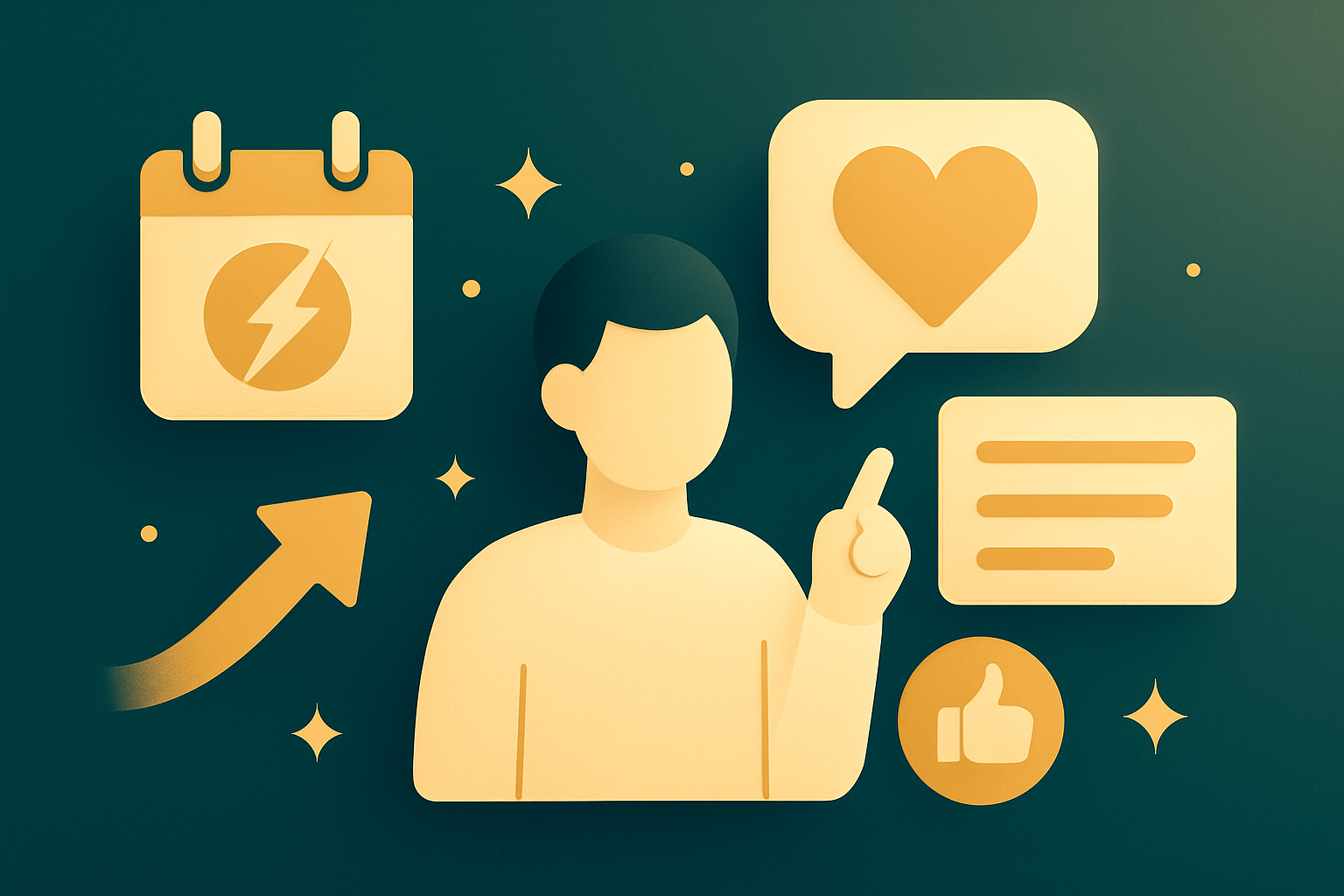
Imagine waking up every day to a new trend or a specific event dominating conversations everywhere, from your morning coffee to family group chats. As a business owner or marketer, ignoring this wave is a significant loss of opportunities that might not come around often. People love to talk about what's new, they look for what's happening now, and your brand that can cleverly join this conversation is the one that captures attention. It's not just about posting anything; it's about knowing how to ride this wave correctly, turning the buzz into real social media engagement that serves your marketing goals. Let's explore how to do this practically.
Understanding the Impact of Current Events on Social Media
Current events act like a giant magnet, drawing the attention of millions of people simultaneously. When a significant event occurs, whether it's sports, arts, politics, or even just a funny trend, you see everyone talking about it. This creates a massive wave of content and interaction. If you can link your brand to this event naturally and appropriately, you guarantee that your message reaches a much wider audience than if you relied solely on traditional content.
Not only that, but current events give your content a sense of credibility and realism. People feel that you are part of what is happening around them, and that you are not just a silent entity selling products and services. This strengthens the relationship between you and your audience, making their interaction with you not just a like or a share, but a genuine engagement built on shared interest. When people see that you interact with events that matter to them, they feel that you understand them, and that you are close to them.
Have you ever wondered why some marketing campaigns succeed brilliantly and spread like wildfire, while others fizzle out and no one hears about them? Often, the difference lies in leveraging the pulse of the street and the general mood. People seek belonging, the feeling of being part of something bigger, and when your brand shares that with them, you build a very strong emotional bond that is hard to break. This makes your audience not just consumers, but ambassadors for your brand.
How to Connect Your Brand to Current Events
Connecting here doesn't mean throwing your product into just any trend; no, the connection must be smart and relevant to your brand. First, you need to ask yourself: Is this event related to our values? Can the product or service we offer provide a solution or an addition to the current conversation? If the answer is yes, then proceed. If not, it's better to avoid the topic entirely, because an inappropriate connection can backfire.
For example, if there's a major sporting event and your company offers energy drinks, you could create content about staying active while watching the game. If you have a clothing store, you might showcase outfits inspired by a specific team's colors. The idea is not just to talk about the event as an event, but to link it to your product or service in a creative way that benefits the audience. You can use humor, offer advice, or even pose a question that opens the door to discussion.
So, how do we find this connection? From our experience working with many clients, the best way is brainstorming. Gather your team and put the event you're considering on the table. Ask: How can our product be part of this conversation? Is there an innovative angle we can present? Sometimes the answer isn't direct; it requires some creative thinking. The connection might be through shared values, like teamwork in a sports event, or passion in an artistic event. The important thing is that the connection isn't artificial, because the audience is smart and understands the difference.
Analyzing Successful Brand Examples Using Current Events
Many brands have excelled at this. Remember when there was a power outage during the Super Bowl? At that time, Oreo tweeted: "You can still dunk in the dark." A simple sentence, but it was very clever, appropriate for a brand like Oreo, and it linked itself to a global event at a moment everyone was talking about it. This tweet went viral and made Oreo a social media star at the time.
Another example: during exam season, you see beverage or food companies running campaigns to encourage students, or offering special deals for them. This not only boosts sales, but also builds a positive image for the brand as a supportive entity in the community. The important thing is to study these examples and understand what made them successful, and then apply that to your strategy in your own way, don't blindly imitate.
So, what made these examples successful? The secret was in speed, relevance, and creativity. Oreo was very fast, leveraging the situation instantly. The connection was appropriate for the nature of the product (dunking cookies). And the creativity was in the simple phrase that stuck in people's minds. When you study a successful campaign, try to break it down into these elements. Was it fast? Was it relevant to the brand and the event? Was it innovative? Answering these questions will help you understand how to build your own campaigns.
Content Distribution Strategies Related to Current Events
After you identify the right event and know how you'll link it to your brand, comes the publishing step. Here you need to be quick and smart. First, prepare your content in advance if the event is anticipated, like holidays or seasons. If it's a sudden event, you need to have a team ready to respond quickly and produce content as soon as possible. Speed is a key factor here so you don't miss the wave.
Secondly, use different content formats. It doesn't always have to be an image with text. It could be a short video, an infographic, a poll, or even a live broadcast. This diversification makes your content more attractive and suitable for different platforms. Don't forget to use appropriate hashtags for the event to ensure wider reach. And interact with the comments you receive; this enhances engagement and makes the audience feel their voice is heard.
In addition to diversity, it's very important to determine the most suitable platforms. Not every event or content is appropriate for every platform. A quick, funny video might be perfect for TikTok or Instagram Reels, while a deeper analysis of a political event might be better for Facebook or LinkedIn. Know where your audience is, how they consume content, and then choose the most appropriate platform. This saves effort and ensures better reach.
Choosing the Right Time for Publishing
Timing, timing, timing. This is the most important thing here. If you publish too early, no one might notice. If you publish too late, the wave will have passed and interest will have waned. You need to be in the heart of the event. Follow the news moment by moment and see what people are talking about most. Sometimes, just one moment makes all the difference.
Always be prepared. You might have a small team responsible for tracking trends and current events. When you see something you can leverage, make a quick decision and publish. Don't let your content stay too long in the review phase if the event is fleeting. Flexibility and speed are the keys to success here. This makes a big difference in the reach of your content and the organic engagement you will get.
For example, in Egypt, during high school exam results announcements, many companies post congratulations or special offers for students. The timing here is critical. If you post congratulations before the official announcement, you might be too early, and if it's days after the announcement, the wave will have passed. Precision in timing means you are a good news follower and have a notification system for any event that might relate to you. Prior preparation allows you to act quickly and accurately.
How to Measure Reactions and Engagement
After you publish your content, it's very important to measure performance. Don't rely on guesswork. Look at the numbers: how many likes, how many comments, how many shares, how much reach. Did this content reach more people? Did it generate more engagement than your regular posts? Did the number of followers increase?
Also, don't forget to look at the quality of the engagement. Are the comments positive? Did people understand the message you wanted to convey? Are there questions that indicate genuine interest? All this data will help you understand what worked and what needs improvement next time. Use available social media analytics tools to get the most out of each campaign. This will greatly help you improve digital marketing for your small business or large enterprise.
Analysis doesn't just show you what happened; it also shows you why it happened. When you know what type of content your audience engaged with most, and when engagement was at its peak, it allows you to refine your future strategies. You might discover that your audience engages more with humorous content, or prefers short videos, or is more interested in certain cultural events than others. Every piece of this information is a treasure that allows you to invest your effort and resources correctly in the future.
Common Mistakes When Using Current Events in Marketing
Not everything that glitters is gold, and not every trend is suitable for you to use. One of the biggest common mistakes is trying to jump on any trend, even if it has no relation to your brand. This can make your brand appear inauthentic or as if it's trying to exploit anything to gain visibility. For example, companies sometimes try to use tragic or sad events to create content, and this completely backfires, causing you to lose your audience's sympathy.
Another mistake is a lack of speed. As we said, current events are short-lived. If you wait too long to publish, the opportunity is lost. Also, don't forget to review your content very carefully before publishing to avoid any spelling errors or misinformation that could make you appear unprofessional. Finally, avoid being part of any arguments or negative discussions; keep your content positive and neutral as much as possible.
Another common mistake we see is "over-exploitation." Some brands try to ride every trend to the point where they lose their core identity. Your audience needs to see authentic and useful content from you, not just a copy of what competitors or anyone else is doing. Be unique, and let your participation in current events add value, not just more noise. Focusing on events that align with your brand's values and your audience ensures much better results.
Tips for Enhancing Your Future Strategies
To always be prepared, have a content contingency plan. Your team needs a clear vision for potential events, and also the ability to respond quickly to unexpected events. Make a list of anticipated events throughout the year (holidays, seasons, global occasions) and prepare content for them in advance.
Also, you need to understand your audience very well. What matters to them? What are they talking about? What kind of content do they like? The better you understand your audience, the better you can provide content that resonates with them and encourages interaction. Don't be afraid to try new ideas, and continuously evaluate your results to learn and improve. Social media changes rapidly, and what works today might not be effective tomorrow. Flexibility and continuous learning are the keys to success.
Ultimately, using current events to boost social media engagement isn't a luxury; it's a necessity. You need to be smart, fast, and creative. Start now by identifying one event you believe you can effectively link to your brand, prepare the content, publish, and observe the results. Don't wait; opportunity won't wait for you. Stay well-informed about popular culture and trends, and always be ready to participate with your creative touch, and believe me, you'll see a significant difference in your audience's engagement and loyalty to your brand.
Related articles
Avoiding the Pitfalls: Common Social Media Marketing Mistakes to Sidestep
Discover the most common social media marketing mistakes businesses make and learn practical strategies to avoid them. From lacking a clear strategy to ignoring analytics, we cover how to transform your social media presence.
Crafting Your Winning Marketing Plan for 2024
Discover how to create a comprehensive marketing plan for 2024 that ensures success. Learn to set SMART goals, analyze your market, manage your budget, and implement diverse strategies for attracting customers. This guide covers everything from content creation to performance evaluation and adapting to market changes.

Mastering Social Media: How to Analyze Audience Behavior for Business Growth
Discover how to effectively analyze audience behavior on social media using analytics tools to boost your marketing strategy. Learn to collect, interpret, and apply data for better engagement and growth.