
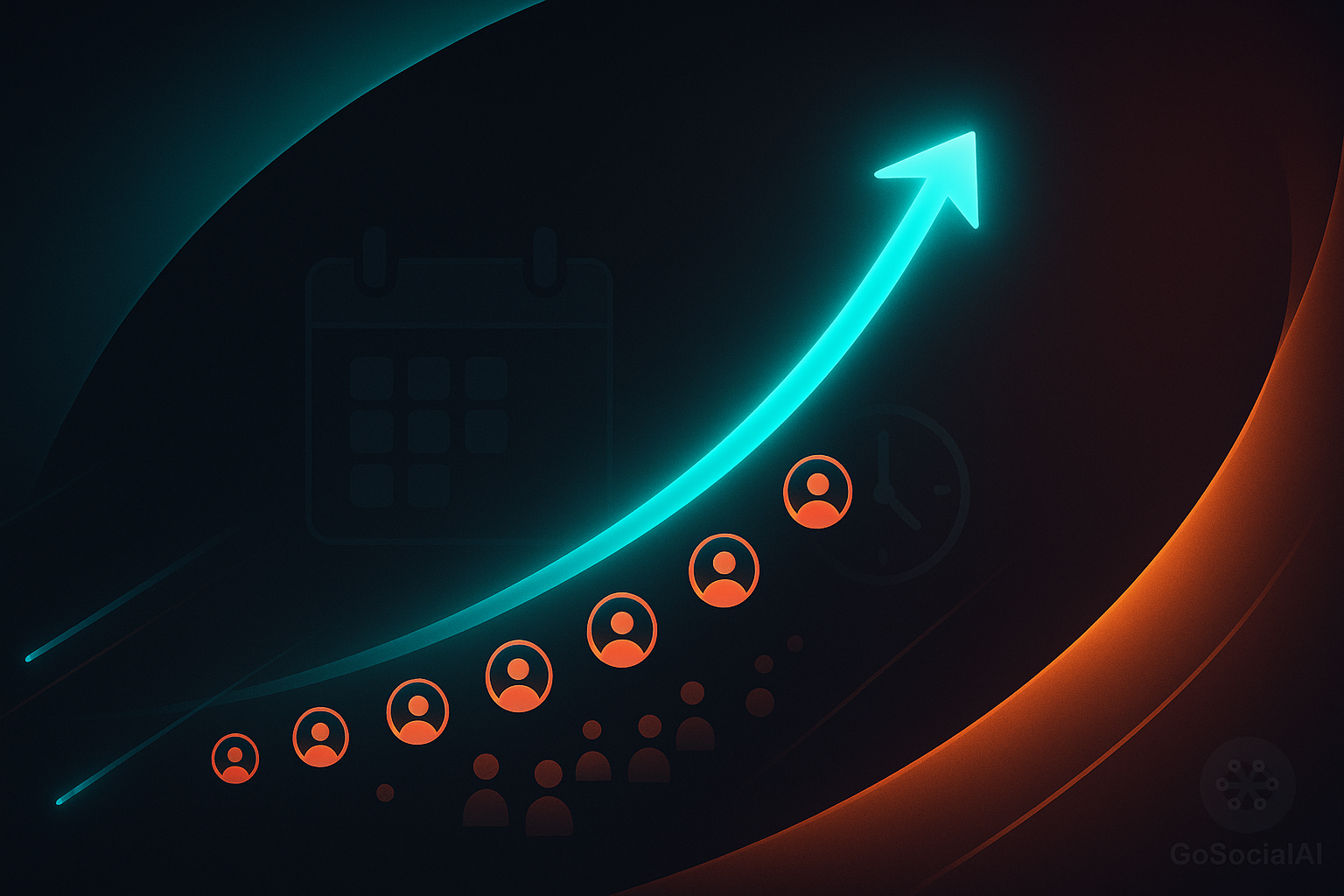
Organic vs paid social is a question that puzzles every business owner: should I focus on free content or pay for ads? The answer isn't "either/or" — they're different tools for different goals, and the smartest move is knowing when to use each and how to combine them. In this guide you'll understand the difference, the pros and cons of each, and how to build a balanced mix that suits your business stage and budget.
What's the difference?
Organic social is all the reach you achieve for free from your content and followers. Paid social is reach you buy with paid ads. Organic is slow but builds a relationship, and paid is fast but stops when the money stops. Understanding this difference is essential to know how to invest your effort and money right. Neither is better than the other, each has a different role in your strategy.
Organic social
Organic is the content you post that reaches your followers and those who engage with it naturally. Its pros: free, builds trust and a long-term relationship, and creates a loyal community. Its cons: slow, and organic reach declines over time due to algorithms. Organic is a long-term investment that builds a real asset (a loyal audience) but needs patience and consistency. It's the foundation that makes your business sustainable.
Paid social
Paid is paying the platform to reach a wider or precisely targeted audience. Its pros: fast, precisely targetable, and reaches non-followers. Its cons: costs money, stops the moment you stop paying, and if your content is weak it wastes your money. Paid is a strong acceleration tool but not a substitute for good content and a real relationship. It scales what you have, it doesn't create from nothing.
Why not "either/or"?
The mistake is thinking you must choose one. The two complement each other: organic builds the foundation and trust, and paid accelerates reach and results. The most successful strategy combines them: strong organic content builds a relationship, and paid ads expand the reach of the best of it. When you use both together in an integrated way, you achieve bigger results than either alone.
When to focus on organic
Focus on organic when you're starting and building your identity and audience, when your budget is limited, and when your goal is building a long-term relationship and community. Organic teaches you what your audience likes before you pay. Build a strong organic foundation first, because it makes any later paid ad more effective. Organic is the house you build on, and paid scales it.
When to use paid
Use paid when you have a clear offer and a defined goal (sales, registrations), when you want to reach a new audience fast, and when you have content that proved its organic success and you want to scale it. Paid works best when built on an organic foundation and an understanding of your audience. Don't start with paid while you still don't know your audience — you'll burn your money.
Don't advertise weak content
The biggest mistake: paying to advertise weak content. An ad scales reach, so if the content is weak, you're paying for more people to see something bad. An ad doesn't fix bad content, it just amplifies it. Test your content organically first, and what proves its success (high engagement) is what you put money behind. This ensures every ad pound works on tested content.
Paid scales organic winners
The smartest use of paid: see which content succeeded organically (high engagement and reach), and put an ad budget behind it to reach the widest. This ensures you're scaling something people proved they like, so the return is higher. Instead of guessing which ad will succeed, let your audience choose for you organically first. This reduces risk and raises your ad-spend efficiency.
Start organic and test before paying
Before spending money, use organic as a testing lab: try different messages, offers and content types and see what touches your audience. What succeeds organically will likely succeed paid. Organic testing saves a lot of ad money because you pay on the proven. This is a smart approach especially for small budgets: test for free, pay on the certain.
Advertising on a small budget
You don't need a huge budget. Social platforms let you start with a very small amount. Start small, target precisely, watch the results, and increase on what works. Smart advertising isn't about budget size, it's about targeting precision and content quality. Even on a small budget you can achieve results if you target right and advertise on strong content. Read the digital marketing for small business guide.
Targeting in paid
The strongest feature of paid is precise targeting: you can reach people by age, location, interests, and behavior. Right targeting is the difference between a successful ad and one that burns money. The more you know your audience, the more precisely you target and the more you save. Don't advertise to everyone, advertise to people who can actually buy from you. Smart targeting makes your small budget work like a big one.
Measure ad return
The most important question in paid: does the ad return more than I pay? Return on ad spend (ROAS) measures this. If you pay 100 and earn 300, your ad is profitable. If the opposite, stop or adjust it. Don't continue an ad that loses you money because "it might improve". Continuous measurement lets you invest in profitable ads and stop losing ones. An ad is a means to profit, not an expense you just pay.
The ideal mix by your stage
There's no single ratio that fits all. In the beginning, focus more on organic to build a foundation. Once established, add paid to accelerate growth. A direct-sales business needs more paid, and a community-building brand needs more organic. Define your mix by your stage, goals and budget, and adjust it over time. Flexibility in the mix is the secret of a successful strategy.
Common organic-and-paid mistakes
- Believing you must choose only one.
- Advertising weak, untested content.
- Starting with paid before understanding your audience.
- Broad targeting instead of precise.
- Continuing a losing ad without measuring return.
Retargeting
One of the strongest uses of paid: retargeting people who engaged with you before (visited your site, saw your product, engaged with your content) but didn't buy. These people are far closer to buying than a new audience, so advertising to them brings a higher return. Retargeting reminds the hesitant customer and closes sales that were lost. It's one of the most efficient ad types because it talks to people who already know you.
Paid for fast idea testing
Beyond expansion, paid is a fast testing tool. If you want to know which offer or message works, you can test it with a small ad and see the result in days instead of weeks of organic testing. Fast paid testing saves time when you need a quick decision. Use organic for free long-term testing, and paid for fast testing when time matters to you more than money.
Conclusion
Organic and paid social aren't competitors, they're partners: organic builds the foundation and trust, and paid accelerates reach and results. Start organic, test, and scale the winners with paid through precise targeting and return measurement. Let Go Social AI help you manage both, and try it free to build a mix that suits your business.
Related articles

Level Up Your Brand: Innovative In-Game Marketing Strategies for 2024
Discover how in-game marketing has evolved beyond traditional ads into immersive brand experiences. This guide explores strategies, market insights, and future trends for brands looking to connect with gamers effectively in 2024, especially within the Arab world.
Hook Your Audience: Crafting Irresistible Content from the First Second
Discover how to captivate your audience from the very first second with engaging content strategies. Learn to craft compelling titles, use visuals effectively, employ storytelling, and leverage interactive elements to make your content irresistible.
Micro-Influencers: Your Budget-Friendly Path to Marketing Success
Discover how micro-influencer marketing can transform your brand's reach and engagement, even with a limited budget. Learn to identify the right influencers, craft effective campaigns, and measure your success for lasting impact.