
Crafting Your Winning Marketing Plan for 2024
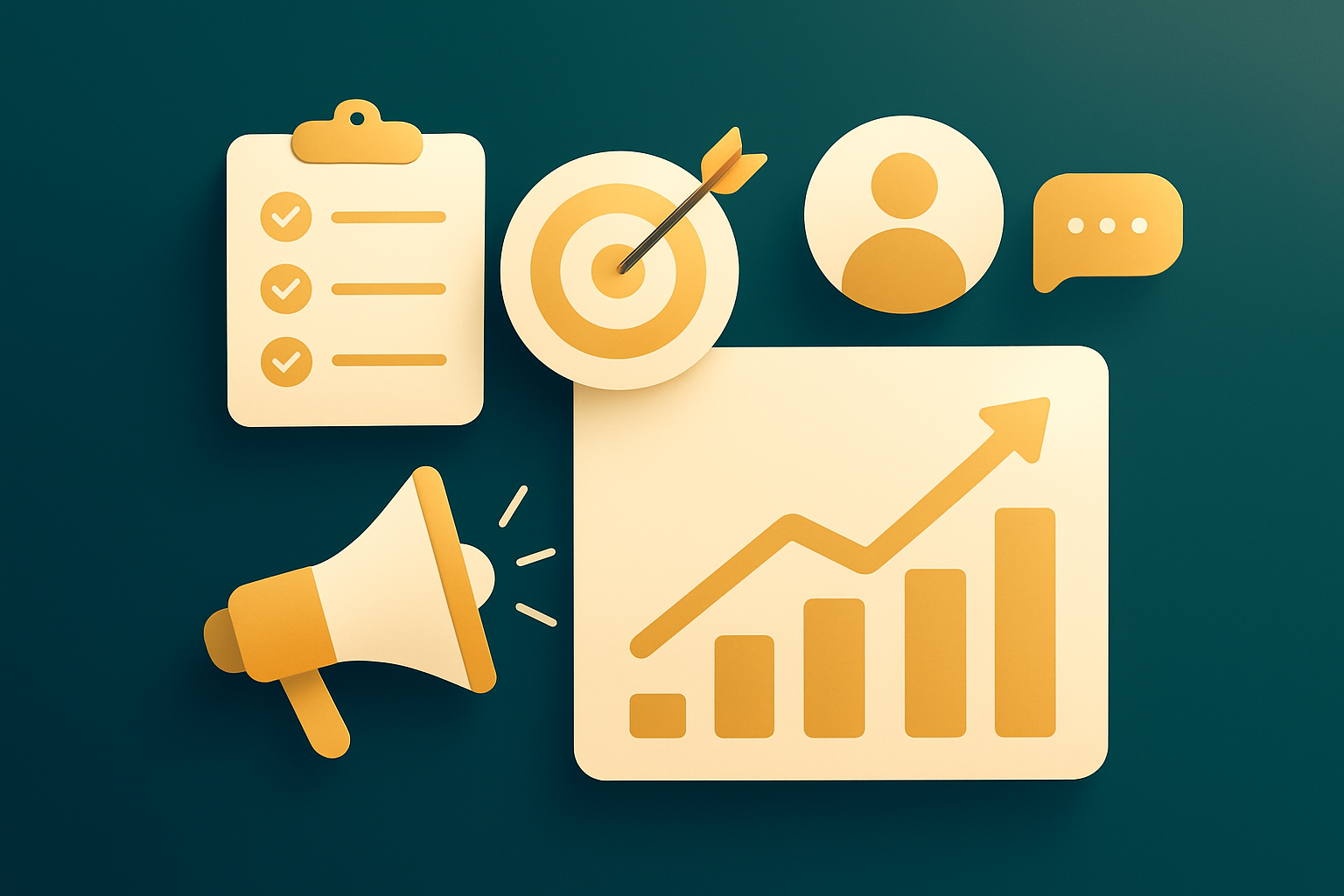
Imagine yourself traversing a vast desert, driving a powerful, fast car with enough fuel for days. Yet, the real key to success isn't the car's strength or even the fuel's quantity. It's knowing precisely where you're going and how to get there. This is exactly what a comprehensive marketing plan does. Many businesses pour huge budgets into marketing only to find themselves going in circles. Why? Simply because they lack a map, they lack clear vision. In 2024, with fierce competition and rapid market changes, a marketing plan isn't a luxury; it's an absolute necessity to achieve your goals and reach your aspirations. Let's explore how to design an integrated marketing plan that guarantees your success.
The Importance of a Clear Marketing Plan
Have you ever launched a project or a marketing campaign without knowing exactly what's required and what results you aim for? If your answer is yes, you're not alone. Many businesses fall into this trap. A marketing plan isn't just papers we write and then set aside; it's the guide that directs every step we take. It helps you understand the market, identify your competitors, and most importantly, know your customers. Without a plan, you'll act randomly, spending a lot of money on things that might not bring any real benefit. A clear marketing plan keeps you focused, helps you measure your progress, and detect problems early to fix them before they escalate. Think of it as a compass and GPS for your project on its marketing journey. It's like a detailed roadmap, pinpointing fuel stops, alternative routes, and even rest areas. Neglecting it means traveling in fog, often leading to getting lost or depleting resources without reaching the destination.
Setting Goals: How to Choose Your Marketing Objectives
Before you start anything, you must ask yourself: What exactly do you want to achieve? Marketing objectives must be SMART: Specific, Measurable, Achievable, Relevant, and Time-bound. So, instead of saying 'I want to increase sales,' it's better to say 'I want to increase sales by 20% during the third quarter of 2024 through targeted marketing campaigns on Facebook and Instagram.' See the difference? The first goal is general and vague, but the second is very clear and you can measure and work towards it. From our experience working with many clients, clear goals are what deliver results. Is your goal to increase brand awareness? Increase the number of leads? Enhance loyalty among existing customers? Each of these goals requires different strategies. Write down your goals clearly and keep them always in sight. Precisely defining your goals guides all your marketing decisions, from platform selection to content type, all the way to budget allocation. Without clear goals, every marketing effort becomes just a random shot, which might hit or might not, and that's not how professionals operate.
Market Analysis: Understanding Competitors and Target Audience
It's impossible to succeed in marketing if you don't understand the environment you're operating in. Market analysis is an essential, indispensable step. Start with a SWOT analysis for your project (Strengths, Weaknesses, Opportunities, Threats). Then, look at your competitors. Who are they? What do they do right? What do they do wrong? What are their weaknesses you can leverage to your advantage? Studying competitors gives you valuable insight into the market and helps you position yourself within it. Most importantly, it's about understanding your target audience. Who are they? What are their interests? What problems does your product or service solve for them? Where do they spend their time online? What language do they understand and interact with? The more you understand your audience, the more effectively you can reach them with impactful marketing messages. For example, if your audience is young people, you'll use platforms like TikTok and Instagram with youthful language, unlike if your audience is business professionals, where LinkedIn would be more suitable with formal language and professional content. Market analysis doesn't just show you the full picture; it allows you to anticipate upcoming moves and prepare yourself for any change. Have you tried conducting surveys for your audience? Or using keyword analysis tools to find out what they're searching for? These are all ways to deepen your understanding of the target customer.
Budgeting: How to Manage Your Financial Resources
Marketing costs money, and that's a fact. But managing a marketing budget isn't just about spending money; it's an investment. You need to set a realistic budget that aligns with your goals and project size. Allocate this budget across the different marketing activities you plan to undertake. Will you focus on paid ads? Or on content marketing? Will you need designers or SEO specialists? Be flexible in distributing the budget, but at the same time, you must know exactly where every dollar is going and what the expected return is. Many small businesses find themselves spending a lot on social media ads without a return, simply because they hadn't set a clear budget for each platform, or they weren't continuously evaluating the performance of those ads. Remember, the budget isn't a black box; it's a tool that helps you invest wisely. It's crucial to allocate a portion of the budget for experimentation. You might have a core budget for successful campaigns and a smaller part for testing new channels or methods. This keeps you ahead of the curve and allows you to discover a new marketing channel that could bring massive returns at minimal cost.
Diverse Marketing Strategies: Attracting Customers
Here we reach the beating heart of the marketing plan. What methods will you use to reach your audience and achieve your goals? There are many options, and you must choose what suits your project and audience. Among the most important strategies currently are: content marketing, SEO, social media marketing (both organic and paid), email marketing, influencer marketing, and paid advertising (Google, Facebook, Instagram, TikTok). For example, if your goal is to increase brand awareness, you might focus on organic social media and content marketing. If your goal is quick sales, you might resort to paid ads on platforms where your audience is present. Combining more than one strategy (Omnichannel Marketing) achieves much better results. The important thing is to choose strategies that align with your message and visual identity, and to know how to implement them correctly. Have you tried affiliate marketing? Or leveraging local marketing if you have a physical business location? Each strategy has its charm and effectiveness in a specific context, and the key is to integrate them harmoniously to achieve the best results.
Performance Evaluation: Measuring Your Marketing Plan's Success
How will you know if your plan is on track? Measurement and evaluation are key to knowing this. You must define Key Performance Indicators (KPIs) for each of your goals. If your goal is to increase awareness, you might measure impressions, reach, and engagement. If your goal is sales, you'll measure actual sales, average order value, and conversion rate. Use available analytics tools like Google Analytics, Facebook Analytics, or any other tool you use. Evaluation must be continuous and periodic, not just at year-end. This helps you see what's working and what's not, and what needs adjustment. Many companies spend large sums on advertising campaigns without measuring their results, which leaves them unaware of what's bringing them money and what's wasting it. Remember, data isn't just numbers; it's a story it tells about your campaigns' performance. Learn how to read that story and leverage it to improve your performance.
Adapting the Plan: Responding to Market Changes
The market is not static; it changes at lightning speed. Technology evolves, consumer behavior shifts, and competitors emerge and disappear. Therefore, your marketing plan must be flexible and adaptable. If you find that a certain strategy isn't delivering the desired results, or a new trend emerges that you can capitalize on, you must be ready to adjust your plan. The continuous evaluation we discussed in the previous point is what will enable you to do this. Just because you created a plan doesn't mean it's sacred; on the contrary, a good plan is one that can adapt to variables and benefit from them. Think of it as a ship captain, changing sails and adjusting course according to wind direction and waves to reach safe harbor. This flexibility is what distinguishes businesses that stay in the market and thrive from those that fade away. Do you have a Plan B? Or a contingency plan in case of a sudden change in the market or consumer behavior?
Practical Tips for a Successful Marketing Plan
- Start small and expand: You don't have to start everything at once. Begin with simple steps, evaluate, then expand.
- Focus on value: Whatever your strategy, you must deliver real value to your customer. How does your product solve their problem?
- Be creative and different: In this sea of competition, you must have a unique voice. Consistent visual identity and original content help with this.
- Invest in continuous learning: Marketing fields change rapidly; always keep learning and staying up-to-date.
- Don't be afraid to experiment: Try new strategies, different channels, and varied messages. See what brings the best results for your project.
- Patience and persistence: Marketing success doesn't happen overnight; it requires patience and continuous effort.
Crafting a comprehensive marketing plan isn't a luxury; it's an investment in your project's future. It will give you a clear view of the path and show you how to reach your goals. Start now, grab a pen and paper, or open a file on your device, and begin outlining your plan. Every step you take, every goal you achieve, brings you closer to your project's success in 2024 and beyond.
Related articles

Mastering Social Media: How to Analyze Audience Behavior for Business Growth
Discover how to effectively analyze audience behavior on social media using analytics tools to boost your marketing strategy. Learn to collect, interpret, and apply data for better engagement and growth.

Influencer Marketing for Lasting Customer Loyalty in 2024
Discover how influencer marketing can boost customer loyalty in 2024. Learn to choose the right influencers, build lasting relationships, and measure impact for sustainable brand growth.
Igniting Growth: Essential Content Marketing Strategies for Emerging Brands
Discover essential content marketing strategies for emerging brands to build trust, attract an audience, and grow sustainably. Learn to define your brand identity, understand your audience, choose effective content types, and measure success.