
Innovative Content Strategies with AI: Your Comprehensive Guide
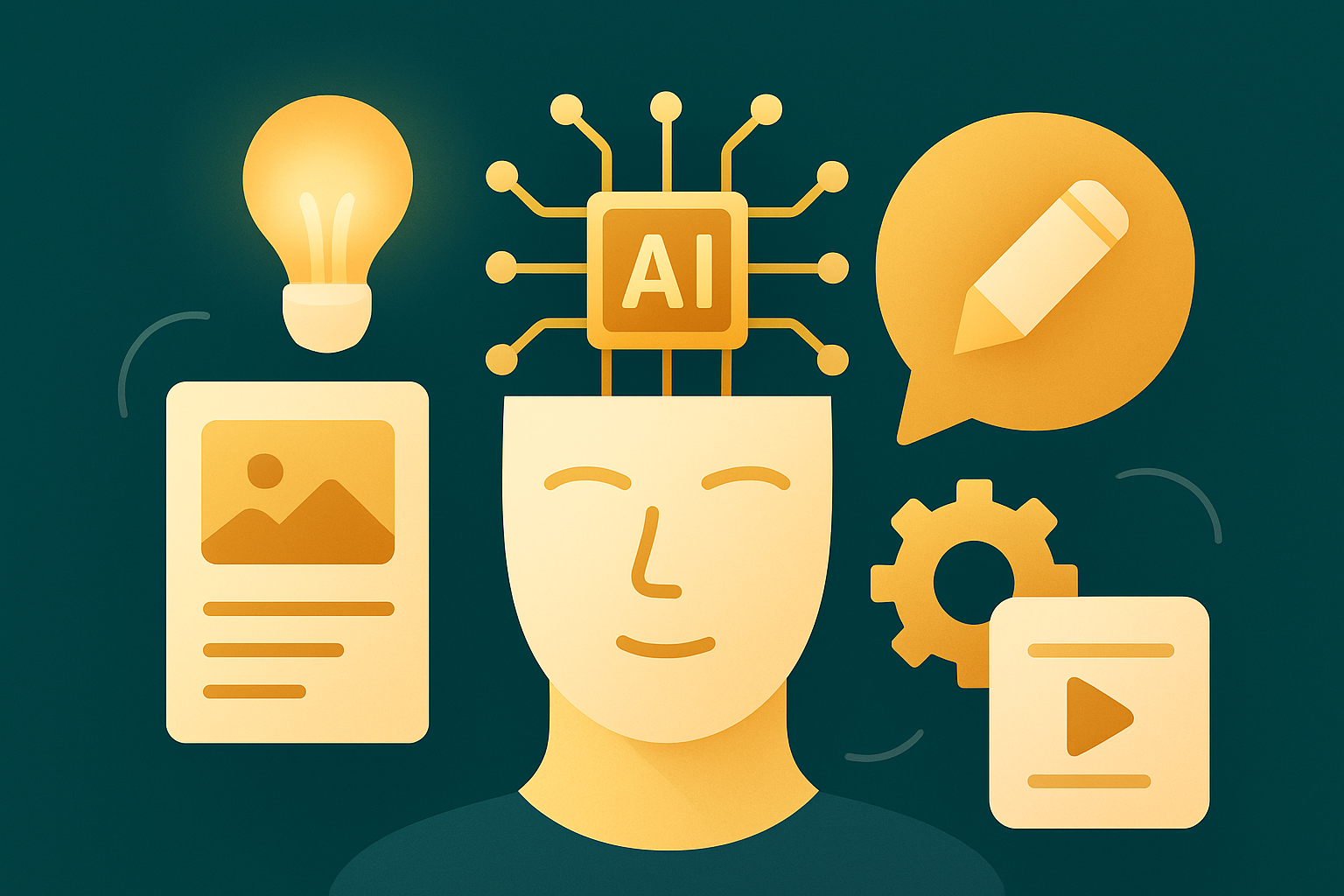
Ever feel lost in the sheer volume of content produced daily? Competition is fierce, and reaching your audience is harder than ever. It used to be enough to write a good article or create a nice video. Now, the game has completely changed. Audiences expect content that isn't just good, but perfectly tailored to them, at the right time, and in their preferred format. People are looking for a personalized experience, something that speaks to them specifically. This is where artificial intelligence steps in, not as a replacement for the human creator who writes and crafts ideas, but as a smart partner opening new doors to innovative content strategies. By using AI, we can focus on true creativity, letting the machine handle routine tasks that consume our time and effort. Let's explore how we can turn this challenge into a great opportunity, building an integrated and effective content strategy using the latest technologies.
Defining Your Content Goal
Before we even think about any AI tool, we must ask ourselves a fundamental and pivotal question: What is the goal of this content? It's a simple question, but its answer dictates everything that follows. Are we aiming to increase brand awareness, letting people know who we are and what we offer? Do we want to generate leads and guide them through the sales funnel? Are we trying to build loyalty among our current audience, turning them into brand ambassadors? Or is our ultimate goal to sell a specific product or service and achieve direct sales? Defining this goal is the compass that directs all our subsequent steps, from choosing topics to designing the content's format itself. Without a clear goal, any content will just be empty words, even if written with the best AI tools. When the goal is specific and clear, like, for instance, increasing newsletter subscriptions by 15% within three months, we can direct AI tools to work directly towards it. This includes analyzing data to discover the best topics that attract subscribers, suggesting ideas that encourage sign-ups, or even drafting the content itself to be persuasive and direct. Our precise understanding of the goal is the key to success.
Analyzing Your Target Audience with AI
AI's greatest strength is its extraordinary ability to analyze massive amounts of data in record time. This allows us to understand our target audience with unprecedented depth. AI tools can analyze user behavior on the web, see which websites they visit, what keywords they search for, and on which social media platforms they spend most of their time. It can even perform sentiment analysis to understand what they like and dislike in competitors' content or even our own past content. Imagine, for example, that you're selling skincare products, and AI tells you that most of your audience are women aged 25 to 35, interested in natural products, searching for solutions to acne and uneven skin tone, and primarily using Instagram and TikTok. Through this analysis, we can build highly accurate and detailed buyer personas, not just guesses based on personal experience. We learn their ages, interests, challenges, problems, and the best channels to reach them. This ensures that every piece of content we produce is precisely targeted to a specific audience, which dramatically increases its chances of success and reduces wasted resources on content that won't reach the right people.
AI Tools for Content Creation
The market is now flooded with AI tools that can help us at every stage of content creation. We're not talking about one tool that does everything, but an integrated system of specialized tools. There are tools that help with keyword research and competitor analysis, like AI-powered Semrush or Ahrefs, which save us hours of manual work in finding trending keywords and content gaps. There are idea generation tools that suggest topics you can write about based on market trends and audience interests, like Jasper or Surfer SEO. Also, there are very powerful writing tools, such as large language models like ChatGPT or Google Gemini, which can produce initial drafts of articles, craft engaging headlines and strong introductions, or even rephrase complex paragraphs for simplification. Not only that, but some tools help you optimize existing content, suggesting improvements for better SEO compliance, easier readability, or even proposing locations for internal links. If you want to learn more about these tools, you can check out Best AI Tools for Social Media Contentwhere you'll find many details and practical examples of these tools.
How to Generate Innovative Content Ideas
AI doesn't just help us write; it also generates ideas. Many of us reach a point of creative block, unsure what else to write about or how to present old topics in a fresh way. Here, AI can be a true creative partner. You can give it a general topic, and it can suggest different angles for that topic, or even propose new content formats like interactive short videos, infographics, Twitter thread series, or even a specialized podcast. The tool can analyze the latest trends in your field, see what questions people are asking on Google or social media, and from there, come up with content ideas that directly answer these questions and solve real problems for the audience. For example, if your field is fitness, AI might suggest topics like 'Top 5 At-Home Back Exercises Without Equipment' based on the increasing search for home workouts. This keeps your content constantly fresh and relevant to current events, and also ensures you provide real value to the audience instead of repeating old, often stale ideas.
Enhancing User Experience and Audience Engagement
Innovative content doesn't just grab attention; it also encourages greater audience interaction. AI can play a significant role in improving the user experience on your website or various platforms. By analyzing user behavior, AI can suggest the best placement for Call To Action buttons, or analyze heatmaps to understand where users focus on your page. This turns content from mere information into a comprehensive experience that captivates the user, encouraging them to spend more time and engage more. Furthermore, AI in digital marketing can be used to set up smart chatbots that can answer immediate audience questions and direct them to relevant content, which improves customer service and reduces bounce rates.
Personalizing Content Based on Data
One of AI's most powerful features is its ability to almost fully personalize content for each individual. Imagine every visitor to your website or page seeing different content, specifically designed for them based on their interests and past behavior. This isn't science fiction; it's happening now. Recommendation systems used by platforms like Netflix and Amazon work on the same principle, suggesting movies and products based on what you've watched or bought before. We can apply this to our content by displaying specific articles or videos to a particular audience based on the data we've collected about them, such as their specific interests or their stage in the customer journey. For example, if a visitor searched for 'professional cameras' on your site, an AI system might suggest articles on 'Comparing Different Camera Types for Beginners' or 'Tips for Landscape Photography with a Professional Camera' on their next visit. This significantly increases engagement rates and improves the user experience, ultimately reflecting positively on our marketing goals. This personalization doesn't just make the content more relevant to the audience; it makes it an integral part of their journey with you, making them feel understood and provided with exactly what they need.
Measuring AI-Enhanced Content Performance
AI doesn't just help us produce content; it also helps us measure its success and understand what worked well and what needs improvement. AI-powered analytics tools can provide detailed reports on the performance of each piece of content: views, time spent by the user reading the article or watching the video, bounce rates, and even conversions that occurred because of it, whether it was a product purchase, form submission, or newsletter subscription. Based on this data, we can make fact-based decisions, not just guesses or personal opinions. If we find that certain content performs poorly, we quickly know and can modify it, remove it, or redistribute it differently. If we find content that achieves remarkable success, we can understand the secret behind its success and replicate it in other content. This is a continuous improvement cycle that ensures your strategy is always evolving, learning from every step, and keeping you ahead of the competition.
Smart Content Editing and Refinement
Even after AI generates an initial draft, the human editor's role remains essential, but even in the editing phase, AI can offer valuable assistance. AI tools don't just correct spelling and grammatical errors; they can suggest improvements to sentence phrasing, simplify complex language, and ensure consistency in style and tone throughout the content. They can also suggest better synonyms or even restructure paragraphs to be clearer and more impactful. For instance, if you write a long and complex paragraph, a tool like Grammarly Premium or even ChatGPT might suggest breaking it into shorter, simpler sentences, or using easier-to-understand terms for the reader. This makes the editing process faster and more efficient, ensuring the final content is high-quality and delivers the message clearly, while retaining the human and creative touch that distinguishes original content.
Successful Examples of AI Content Strategies
Many companies have started using AI very successfully and tangibly. For example, major news outlets like the Associated Press use AI to automatically write sports and financial reports based on data and figures, which frees up journalists' time to focus on analytical stories and investigations. E-commerce companies use it to generate hundreds of thousands of attractive and persuasive product descriptions, like Amazon, which uses AI to improve search results and suggest products. Even in content marketing, brands are using AI tools to generate ideas for entire advertising campaigns, or to write ad copy tailored to different audience segments. For example, an AI tool might suggest ready-to-use prompts for social media content that suit a specific event or target audience, along with suggesting optimal posting times. The results are usually faster, more cost-effective, and more efficient than traditional methods, giving companies that adopt AI in their content a clear competitive advantage in the market.
Practical Steps to Implement Your New Strategies
Now that we understand the capabilities AI offers in content, how do we begin and apply this in reality? The first step is to clearly define your goal, as we agreed. Do you want to increase social media engagement, boost sales, or build a loyal audience? Next, start analyzing your audience using available tools; you can begin with free or trial tools like Google Analytics or social media analytics tools. Then, choose one or more AI tools suitable for your needs and budget, whether for writing, data analysis, idea generation, or even SEO improvement. Start with a small experiment, for example, write one article or a set of social media posts using the tool. Analyze the results, see what you liked and what needs adjustment in the style or in the use of the tool itself. Don't be afraid of trial and error; the important thing is to learn from every step and adapt to new tools. Remember that AI is a tool that assists you, not replaces your creative role as a content creator. The key is knowing how to use this tool correctly to achieve the best possible results and produce unique and innovative content. Start now, even with a small step, and see how AI will transform your work and open up completely new horizons in the world of content.
Related articles

AI Productivity for Content Creators: Maximizing Output and Quality
Discover how AI productivity tools can revolutionize content creation, boosting output and quality without sacrificing human creativity. Learn practical strategies and real-world examples.
Boost Engagement: How AI Transforms Content into Interactive Experiences
Discover how AI is revolutionizing content, transforming passive consumption into dynamic, personalized interactive experiences that boost engagement and drive results.

AI Content Personalization: Reshaping Digital Marketing Engagement
Discover how artificial intelligence is revolutionizing content personalization in digital marketing, creating unique user experiences and driving engagement. Learn AI's role in analyzing behavior, the tools available, and strategies for effective implementation.