
AI in Digital Marketing: Your Guide to Understanding Audiences and Hitting Goals
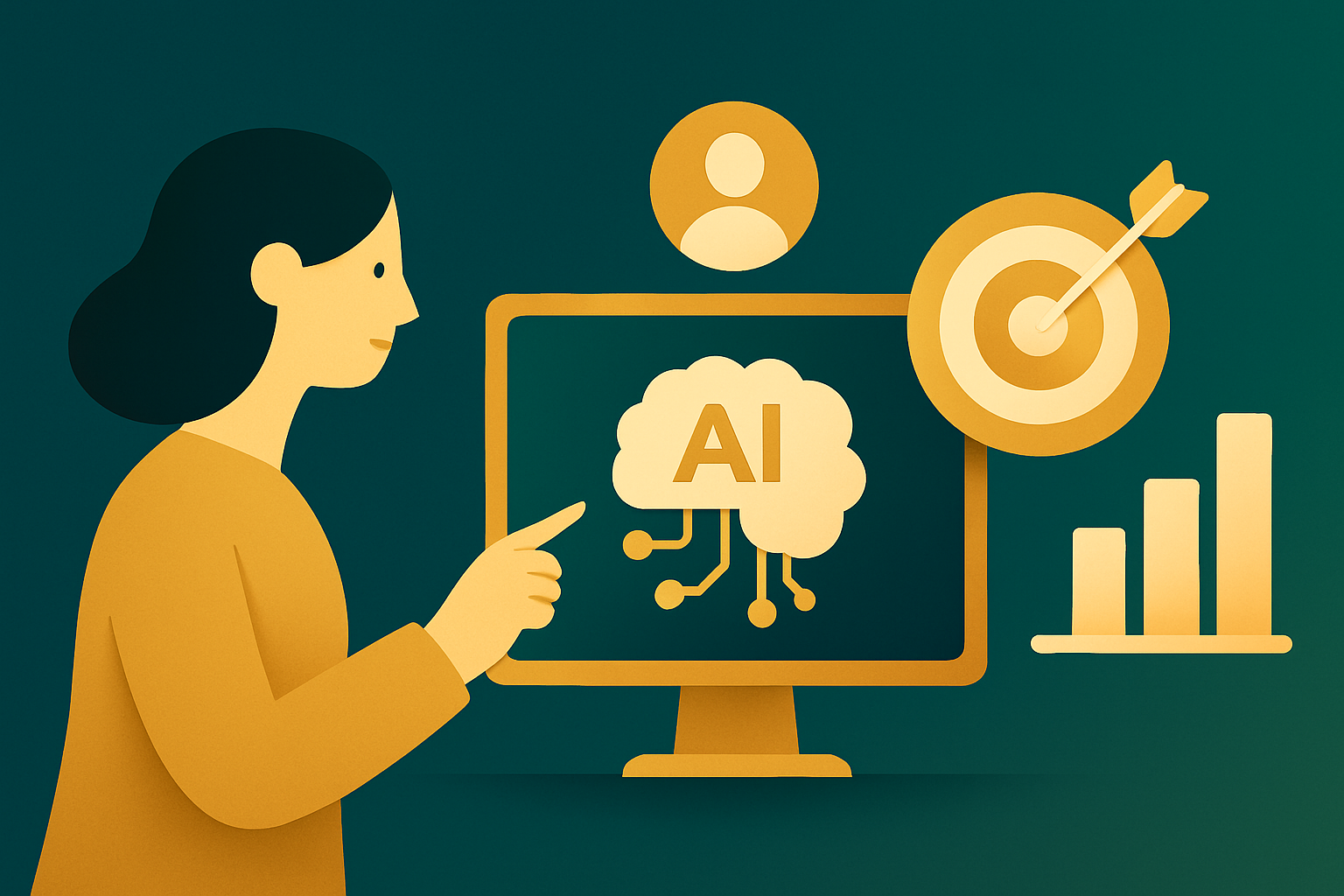
Still think AI is just buzz or some far-off tech? Then you're missing out. Companies big and small are already using it to deeply understand customers, reach them effectively, and drive higher sales. This isn't about replacing human effort; it's about amplifying it, making it smarter and faster. Imagine predicting what your customer wants before they even think of it, or knowing which ad campaign will deliver the highest ROI before spending a dime. This isn't science fiction. It's a daily reality for clients who grasp the value of digital marketing for small businesses and large enterprises, and how to integrate AI within it.
AI and Digital Marketing: A Closer Look
Artificial Intelligence refers to machines mimicking human intelligence for specific tasks, like learning, decision-making, and problem-solving. In digital marketing, we operate in a data-rich world: customer interactions, purchases, website browsing, and even overall market sentiment. This is where AI shines. It analyzes this massive volume of data faster and more accurately than any human, extracting patterns and predictions that empower marketers to make superior decisions. A marketer still relying solely on intuition for strategy is losing real opportunities that AI could unlock. It's like having an incredibly precise treasure map in a vast ocean full of islands. Will you venture out randomly, or use the map to head straight for your goal?
The Power of AI in Audience Understanding
To sell your product or service, you absolutely must know who you're selling to. Audience knowledge isn't just age, gender, and location. It runs much deeper. AI analyzes online user behavior: what they click, what they buy, what they search for, and even the emotions expressed in their comments. Through Natural Language Processing (NLP) and machine learning, AI builds an incredibly accurate profile of your ideal customer: their interests, challenges, and even hidden motivations. This allows you to speak their language, offering the exact solution they're seeking. Imagine knowing that most of your customers in a specific age group are looking for solutions to a particular problem at a certain time of day. AI extracts this insight from the noise of data. For instance, AI might discover that working women between 30 and 45 who search for skincare products tend to engage with short educational content on Instagram during their work breaks. This precise insight lets you direct your marketing efforts with unprecedented accuracy.
Optimizing Ad Campaign Targeting with AI
One of the biggest challenges in paid advertising is ensuring your money is spent effectively, reaching the right audience. Here, AI plays a pivotal role. It doesn't just help identify your audience; it helps you reach them at the right time, in the right place, with the right message. AI systems in ad platforms like Google and Facebook constantly learn from past campaign performance. They identify keywords that drove more conversions, the types of images and videos that captured attention, and the times when your audience is most engaged. This leads to more precise targeting, better results, and a higher return on investment. A marketer using AI in their campaigns adjusts budgets, tweaks targeting, and even modifies ad copy in real-time based on live data. This saves significant time and money, and prevents common mistakes we see in social media management. Picture your Facebook ad campaign starting with a high cost-per-click, but within a few days, the AI system adjusts audience targeting, changes ad visuals, and even modifies display times, reducing CPC by 30% and increasing conversion rates. This continuous optimization is what sets AI-powered marketing apart from traditional methods.
Personalizing User Experience: From Visitor to Loyal Buyer
What's the difference between a website where you feel like a valued customer and one that treats you as just another visitor? Personalization. AI is the key to true personalization. It doesn't just show you products similar to what you've seen; it predicts products you might like based on your behavior, the behavior of similar customers, and even market changes. You might see perfectly tailored ads on different websites or receive emails with offers designed specifically for you. This makes the customer feel heard and understood, fostering brand loyalty and increasing repeat purchases. Think about Amazon or Netflix. How do they recommend products or movies that feel like they were made just for you? That's not magic; it's AI at its best, analyzing, understanding, and delivering what you want before you even ask.
AI Tools Available for Marketers
The market is brimming with AI tools to assist your marketing efforts. There are data analysis tools that provide detailed reports on customer behavior, content creation tools that help you write ad copy or articles quickly, and even chatbot tools that answer customer inquiries around the clock. There are also tools that analyze competitor performance, forecast sales, and optimize product pricing. You don't need to be a coding expert to use these tools, as most have user-friendly interfaces and save you significant effort and time. Examples include HubSpot, Salesforce Einstein, and Marketo for performance measurement and customer relationship management. For content generation, tools like Jasper or Copy.ai can be a good starting point, but always review content and add your human touch. Google Analytics 4 also uses machine learning to provide deeper insights into user behavior, helping you better understand the customer journey.
Big Data Analysis Using AI
Big data refers to massive volumes of information collected from various sources. Trying to analyze it manually would be impossible. Here, AI is the savior. It processes millions of data points, extracting complex patterns and relationships that humans would struggle to notice. This helps you understand what's happening in the market, what drives your customers, and hidden opportunities to exploit. This data is analyzed to discover which products are in high demand during a specific season, or what type of content attracts a particular audience. The ability to analyze this data isn't a luxury; it's a necessity for making marketing decisions based on facts, not just guesses. For example, AI might analyze thousands of purchase transactions and reveal that customers who bought product (A) also tend to buy product (B) within 7 days. This insight allows you to create targeted promotional offers that increase average order value.
AI and Future Trend Prediction
AI doesn't just analyze the past and present; it also predicts the future. By analyzing historical data and behavioral patterns, it forecasts emerging market trends, products that will see increased demand, or even shifts in consumer behavior. This gives marketers a significant competitive edge. Imagine knowing that a certain trend will take off in two or three months. This allows you to prepare your marketing campaigns, ready your products, and be prepared to meet demand before competitors even think about it. This predictive ability helps you stay a step ahead, seizing opportunities before they become common and costly. For example, if AI tracks social media conversations and specific keyword searches, it might predict a rise in demand for sustainable products or locally made goods before the trend becomes mainstream.
Automating Marketing Tasks to Save Time and Effort
How many times have you felt like you're wasting time on repetitive, labor-intensive tasks, such as sending emails, scheduling social media posts, or even analyzing preliminary reports? This is where AI-powered automation steps in. AI handles these tasks efficiently and quickly, freeing up your valuable time for more creative and strategic endeavors. This not only saves time but also reduces human error and ensures workflow continuity. Imagine a system that automatically sends reminders to customers who abandoned their shopping carts, or posts content across all social media platforms at optimal times for each. This frees your team to focus on growth strategies and innovative thinking.
Successful Case Studies of AI Adoption in Marketing
Numerous global and local companies have significantly benefited from AI. Amazon, for example, uses AI in its recommendation system, suggesting products to customers based on their past purchases and browsing, which significantly boosts sales. Netflix uses it to understand what content each user likes and recommends it to them, leading people to spend more time on the platform. Even in Egypt, we see telecom companies and banks using AI-powered chatbots to respond to customer inquiries faster and more efficiently, improving customer experience and saving on customer service costs. The common thread in all these cases is that AI isn't just technology; it's a tool to achieve clear, tangible business goals. Similarly, many Egyptian e-commerce companies use AI to analyze visitor data and personalize product offers, leading to a noticeable increase in conversion rates and a reduction in abandoned shopping carts.
How to Start Integrating AI into Your Marketing Strategy?
- Clearly define your goals: What problem do you want AI to solve for you? Is it improving ad targeting, increasing conversion rates, or saving time on content creation? Defining the goal is the first and most crucial step.
- Start small with simple tools: You don't have to launch giant projects. You can use a simple data analysis tool or experiment with a small chatbot on your website. The goal is to learn and get comfortable with the technology.
- Collect and organize your data: AI thrives on data. The more organized and accurate your data, the better the results. Review customer data, sales data, and website data.
- Invest in training: For yourself or your team. Understanding how these tools work and using them effectively will make a big difference in results. Many courses are available, free and paid, to help you and your team understand AI basics and its marketing applications.
- Monitor, analyze, and continuously improve: AI isn't a magic bullet that works on its own. You must track tool performance, analyze results, and make necessary adjustments to achieve the best possible performance. Always remember that AI is a powerful tool, but the human element in decision-making and contextual analysis remains indispensable.
AI today isn't a luxury; it's an essential tool for any digital marketer aiming for effectiveness and competitiveness. Start today by identifying one small goal you want to achieve with AI and choose a simple tool to help you. You'll be surprised by the difference it can make in your results. It's not as complex as you might imagine, and consistent small steps lead to big outcomes. Start now.
Related articles

Level Up Your Brand: Innovative In-Game Marketing Strategies for 2024
Discover how in-game marketing has evolved beyond traditional ads into immersive brand experiences. This guide explores strategies, market insights, and future trends for brands looking to connect with gamers effectively in 2024, especially within the Arab world.
Hook Your Audience: Crafting Irresistible Content from the First Second
Discover how to captivate your audience from the very first second with engaging content strategies. Learn to craft compelling titles, use visuals effectively, employ storytelling, and leverage interactive elements to make your content irresistible.
Micro-Influencers: Your Budget-Friendly Path to Marketing Success
Discover how micro-influencer marketing can transform your brand's reach and engagement, even with a limited budget. Learn to identify the right influencers, craft effective campaigns, and measure your success for lasting impact.