
How to Maximize Returns with Paid Content Marketing: A Complete Guide
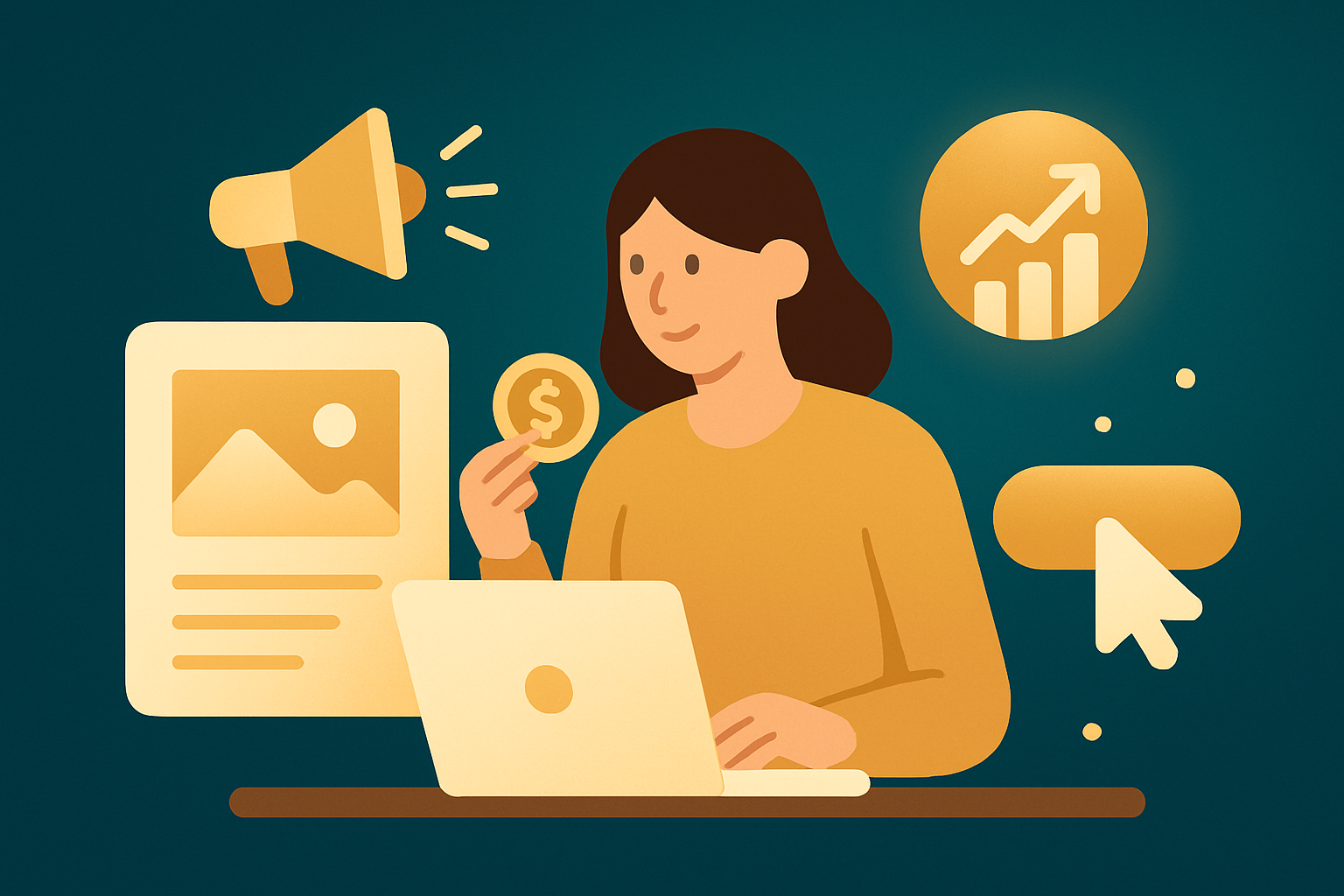
Are you struggling to grow your business with a limited marketing budget? Do you see competitors everywhere but can't figure out how to reach your audience effectively? The problem often isn't your product or service. It's how you connect with the people who need it. Paid content marketing is a powerful solution that can deliver your message to thousands, even millions, of potential customers, but only if executed correctly. Many businesses spend heavily on ads without seeing results because they view it simply as spending money, lacking a clear strategy or deep understanding of the game. Here, we'll show you how to maximize every dollar you invest in advertising and achieve the highest possible return. Success in paid marketing isn't luck; it's a science and a skill.
Introduction to Paid Content Marketing and Its Importance
Paid content marketing is simply paying platforms like Facebook, Google, Instagram, LinkedIn, and others to get your content in front of a larger audience or a specific target group. Instead of waiting for people to discover you by chance, you go directly to them. Why is this crucial for businesses today? Imagine having a shop on a side street, where customers struggle to find you. Paid marketing is like opening a branch on the city's busiest street, attracting everyone who walks by. It accelerates brand awareness, boosts sales, and gives you significant control over who sees your content, when, and where. Without it, competing in the digital market will be incredibly challenging, especially if you're just starting your venture.
In a noisy market like ours, there's no luxury of waiting. Every second that passes without your voice reaching the right audience means lost opportunities. Paid marketing offers a shortcut to save time and effort, ensuring your message reaches those who genuinely need it. We've seen many examples of small businesses outcompeting larger entities with far smaller budgets simply by effectively leveraging paid marketing and directing their investments precisely. The key isn't the size of the budget, but the intelligence of its use.
Understanding the Paid Content Marketing Funnel
To create effective campaigns, you must understand the buyer’s journey. Paid content marketing isn’t just about blasting ads to anyone. Instead, you need to create different types of content for each stage of the funnel: awareness, consideration, and conversion. At the awareness stage, you might promote educational blog posts or entertaining videos that introduce your brand. During the consideration stage, retargeting ads showcasing product comparisons, testimonials, or detailed guides help nurture interested prospects. Finally, for conversion, offer exclusive discounts or limited-time offers to encourage immediate action. Mapping your content to each step ensures you don’t waste budget on the wrong message at the wrong time.
For example, a fitness brand can use short motivational videos to reach new audiences (awareness), followed by retargeting ads featuring customer transformation stories (consideration), and finally a direct sign-up offer for personal training (conversion). This layered approach builds trust and moves people smoothly through your sales funnel.
How to Define Your Marketing Objectives
Before you spend a single dollar on advertising, you must ask yourself: What exactly do I want to achieve? Is your goal to increase brand awareness, meaning you want more people to know who you are and what you do? Or do you want to boost engagement with your content, like likes, comments, and shares? Or is your primary goal to increase sales or the number of subscribers to your mailing list? These objectives must be Specific, Measurable, Achievable, Relevant, and Time-bound (SMART). For example, instead of saying, "I want to sell more," you might say, "I want to increase sales of Product X by 20% during the last quarter of this year." When you clearly define your goals, you can measure the success of your campaigns and adjust your strategy if necessary. How will you know you've succeeded if you don't even know what success looks like?
"Defining clear goals helps you focus your budget effectively. If brand awareness is your main goal, you might invest more in video ads that reach a large audience. If direct sales are your target, then ads directing customers straight to a product page with a special offer will be more suitable."
Accurate goal setting also helps you make strategic decisions based on data, not just guesswork, which significantly impacts your return on investment. Think about your business: What is the biggest challenge you face right now? Is it low website traffic? Weak sales? Lack of public awareness? Each of these challenges requires a different paid marketing strategy.
Choosing the Right Platforms for Paid Ads
Every platform has its audience and approach. Choosing the wrong platform can waste your entire budget. If you're targeting young people interested in fashion and entertainment, Instagram and TikTok might be best. If your audience consists of businesses and executives, LinkedIn will connect you with them. If you sell products or services people actively search for, Google Ads is the most suitable. Consider where your audience spends most of their time and what type of content they engage with there. You don't have to be everywhere; the important thing is to be strongly present in the right place. Have a small business and wondering how to choose the right platform for your activity? It depends on your audience and goal, not the platform's popularity.
For instance, if you own a restaurant and want to attract new customers in a specific area, geographically targeted Facebook and Instagram ads will be ideal, featuring attractive food photos and special offers. However, if you have a company offering consulting services to businesses, LinkedIn ads targeting executives and business owners will be the most powerful. Even within the same platform, there are different types of ads. On Facebook, for example, you can choose image ads, video ads, Stories, or even Messenger Ads. Each type has its nature and audience, and understanding them allows you to leverage the platform to its fullest potential.
Exploring Advanced Targeting Techniques
Modern ad platforms offer advanced targeting options that go far beyond simple demographics. You can use lookalike audiences to reach people who have similar behaviors and interests as your existing customers. Custom audiences allow you to upload your own customer lists and retarget website visitors who didn’t convert the first time. Behavioral targeting lets you display ads to users based on recent online activities, such as searching for a competitor or engaging with specific content.
For example, an online bookstore could create a lookalike audience based on its most loyal buyers, ensuring new ad spend is directed toward users most likely to purchase. E-commerce brands often run dynamic product ads targeting users who abandoned their shopping carts, showing them the exact product they were interested in, with a gentle nudge to complete their purchase. These tactics boost relevance and maximize return on ad spend.
Types of Content Suitable for Promotion
Not all content is suitable for paid ads. Content here must be specifically designed to grab attention and achieve your defined goal. This content could be short, engaging videos showcasing your product or service innovatively. It could be high-quality images with strong ad copy that evokes emotions. It could be blog articles explaining a specific problem and offering your solution, or case studies showing how your product helped other customers. The most important thing is that the content is valuable to the target audience, solves a problem for them, or fulfills a desire. Educational or entertaining content that provides added value often achieves better results than direct sales ads.
Think about content that tells a story. People love stories. It could be a short video showing a day in the life of a customer who used your product and whose life changed for the better. Or an article explaining how your company started to solve a real problem. Interactive content like surveys or short quizzes can be very effective in grabbing attention and collecting data about the audience. Also, testimonials from satisfied customers are considered one of the most powerful types of paid content because they build trust and credibility. Customers trust other customers more than they trust direct ads from the company itself.
Infographics, downloadable checklists, and webinars work exceptionally well for B2B audiences, while entertaining short-form videos and memes tend to perform better for younger, consumer-focused audiences. The important thing is to test various formats and analyze performance, then double down on what resonates most with your audience.
Precisely Defining Your Target Audience
Who are your ideal customers? What are their ages? Their interests? What problems do they face? Where do they live? The more you know your audience, the better you can reach them with relevant content. This isn't just guesswork; it relies on analyzing available data, conducting market research, and reviewing your current customers. Advertising platforms now provide powerful tools to precisely define your audience, from age, gender, and geographical area, to behavioral interests, education, and job titles. The more precise you are in defining your audience, the more effective and cost-efficient your campaigns will be, because you reach those who are genuinely interested, instead of spending money on people who don't care.
Facebook, for example, offers incredibly detailed targeting tools. You can target people based on pages they've liked, events they've attended, or even the types of devices they use. Knowing these precise details about your audience enables you to craft marketing messages that are personally tailored to them, significantly increasing engagement and conversion opportunities. Imagine being able to deliver an ad for a programming course only to recent engineering graduates in the Greater Cairo area? This becomes possible with precise targeting. Defining your audience isn't a luxury; it's the foundation of any successful marketing campaign.
How to Write Engaging Content for Paid Ads
Paid ad content is an art in itself. It must be short, direct, and action-oriented. The first few seconds or the first two lines determine whether a person will continue reading or watching, or skip the ad. Start with a question that addresses the audience's problem, a shocking statistic, or an attractive offer. Use simple, clear language, avoiding complex jargon. Focus on the benefits the customer will receive, not just the product features. How will your product solve their problem? How will it make them feel better? Most importantly, there must be a clear Call to Action (CTA) at the end of the ad: "Buy Now," "Learn More," "Subscribe." If you want to understand more about the terms we use in digital marketing, you can refer to our article on essential social media terms.
Writing effective ad content begins with a deep understanding of human psychology. People are driven by emotions and desires. Does your product save them time? Solve a problem for them? Make them feel safe or happy? Focus on these emotions in your content. Use strong, evocative words. For example, instead of saying "We have a high-quality product," you might say, "Discover the secret to radiant skin every woman dreams of!" Use a simple, direct style, as if you're talking to a friend. From our experience working with many clients, we've noticed that ads that pique curiosity or promise a quick, tangible solution to a problem achieve the highest click-through and conversion rates. And always test multiple versions of your ad, varying headlines, images, and text, to find out what performs best.
Budget Management and Cost Optimization
Your budget is the fuel for your campaigns, and managing it wisely determines your success. When to spend more? When to reduce spending? Starting with a small, experimental budget is always wise, especially if you're trying a new platform or audience. Once you confirm the ad's effectiveness, you can gradually increase the budget. Use the "Campaign Budget Optimization" feature offered by most platforms to automatically allocate the budget to the best-performing ads. Also, continuously monitor your Cost Per Click (CPC) and Cost Per Acquisition (CPA). If you find these costs rising inexplicably, it means there's a problem with the ad or targeting, and you need to review your strategy. Don't forget that promotions and discounts can be an excellent way to increase sales without a massive increase in ad spend.
Set clear daily or lifetime caps for your campaigns to avoid nasty surprises. Allocate your budget based on which channels and ad sets deliver the best cost per conversion. A good practice is to start broad and then shift funds toward top-performing audiences and creatives. Don’t be afraid to pause poorly performing ads quickly. Consistently review your return on ad spend (ROAS) to ensure you scale what works and cut what doesn’t.
Analyzing Performance and Measuring Success
After launching your ad campaigns, the work isn't over. That's just the beginning. You must continuously monitor your campaign performance. What's working well? What needs adjustment? Look at Key Performance Indicators (KPIs) like: Cost Per Click (CPC), Cost Per Acquisition (CPA), Conversion Rate, and Return On Ad Spend (ROAS). If you find a particular ad spending a lot without yielding results, pause it and try something different. If an ad is successful, increase its budget. Continuous testing (A/B testing) of different ad versions, images, headlines, and even target audiences, is key to long-term performance improvement. Paid marketing is a continuous optimization process, not just a button you press and forget.
Use the analytics tools provided by the advertising platforms themselves, such as Facebook Ads Manager or Google Ads. These tools give you deep insights into your ad performance: who saw them, who interacted with them, and what steps they took afterward. Also, linking your ad accounts to website analytics tools like Google Analytics gives you the full picture, allowing you to see how visitors from ads behave on your site. Do they spend a long time? Do they make purchases? Do they abandon their shopping cart? Every piece of information helps you adjust your strategy and make it stronger and more effective.
Integrating Paid and Organic Efforts
Smart marketers don’t treat paid and organic strategies as isolated silos. In fact, integrating both amplifies results. Promote your best-performing organic content with small ad budgets to reach wider audiences. Use insights from paid campaigns to inform your organic content calendar and vice versa. For example, if a particular blog post or video generates lots of sales through paid ads, consider pinning it to your social media profiles or highlighting it in email newsletters. Conversely, test ad creatives that reflect high-engagement organic posts. This synergy increases efficiency and ensures consistent messaging across channels.
Paid campaigns can also accelerate audience growth, which you can nurture through community management, content, and retargeting. Over time, the compounded effect boosts both brand equity and sales.
Avoiding Common Mistakes in Paid Content Marketing
Many fall into mistakes that can cost them huge budgets without any return. One of the biggest mistakes is not clearly defining the goal, leading advertisers to spend money on "brand awareness" ads when their primary goal is sales. Another common mistake is not understanding the target audience, resulting in ads reaching people who aren't interested in the product at all. Also, ignoring data analysis and not conducting A/B tests leaves you in the dark, without knowing what works and what doesn't. Don't forget content quality; an ad with a poor image or weak copy won't yield results, no matter the budget. Finally, some people launch a campaign and leave it running without continuous monitoring or optimization, missing many opportunities for improvement. Paid marketing requires patience and continuous follow-up.
Successful Examples from the Arab Market
In the Arab market, we've seen many successful examples of paid content marketing. Companies like Noon and Souq.com (before acquisition) invested heavily in Google and Facebook ads to reach the widest segment of customers and introduce them to their presence and offers. Delivery apps like Talabat and Mrsool used social media ads extensively to attract new users and increase their orders. Even small and medium-sized businesses, with their limited capabilities, have achieved significant success. For instance, a small restaurant in Cairo might target its ads only to its surrounding area, showcasing attractive food photos with a special delivery offer, which brings in many customers without massive spending. The secret here is focusing on the local audience and engaging content that motivates people. From our experience, many real estate companies in Egypt and Saudi Arabia use Facebook and Instagram ads to target segments looking for luxury properties, which brings them thousands of qualified leads every month.
Paid marketing, when done right, can transform your business from a mere idea into a brand with a real presence and consistent sales. Start by clearly defining your goals, know your audience, choose the right platform, and create content that moves them. Then, monitor, analyze, and optimize. Don't be afraid to experiment and adjust; it's a fundamental part of the entire process. Start now, take a real step towards building your strategy, and see the difference it will make in your business.
Conclusion: Getting Started with Paid Content Marketing
Launching your first paid content campaign may feel overwhelming, but you don’t need to do everything at once. Start with a single, clear objective and a well-defined audience. Choose the channel that aligns best with your business, create compelling content, and set a small test budget. Measure everything and be prepared to make fast adjustments. Learn from both your failures and wins. Paid content marketing is a dynamic process that rewards those who stay curious and persistent. As you build experience, your campaigns will become increasingly effective and cost-efficient, helping your business grow in reach, sales, and brand loyalty.
Related articles

Level Up Your Brand: Innovative In-Game Marketing Strategies for 2024
Discover how in-game marketing has evolved beyond traditional ads into immersive brand experiences. This guide explores strategies, market insights, and future trends for brands looking to connect with gamers effectively in 2024, especially within the Arab world.
Hook Your Audience: Crafting Irresistible Content from the First Second
Discover how to captivate your audience from the very first second with engaging content strategies. Learn to craft compelling titles, use visuals effectively, employ storytelling, and leverage interactive elements to make your content irresistible.
Micro-Influencers: Your Budget-Friendly Path to Marketing Success
Discover how micro-influencer marketing can transform your brand's reach and engagement, even with a limited budget. Learn to identify the right influencers, craft effective campaigns, and measure your success for lasting impact.